Home / Inpatient Mental Health Treatment Program / Introduction to Panic Disorder
Everyone feels anxious once in a while. Sometimes, certain events may trigger feelings of fear in a person. Anxiety is a normal response to a real or perceived threat.
But when anxiety occurs on a routine basis, it could be a sign of another problem. These feelings range from mild to intense and can impact the quality of your life. Persistent fear and anxiety that comes out of the blue is called panic disorder.
Panic disorder is a condition that’s characterized by intense feelings of anxiety. These feelings are accompanied by certain physical sensations. You may experience chest pains, shortness of breath, and an increased heart rate. Other symptoms include nausea, dizziness, and intestinal issues. In some cases, a person may experience a loss of appetite or an increase in eating due to anxiety.
Symptoms of anxiety disorder are very disturbing and stressful. Most symptoms mimic a heart attack. Chest pains, shortness of breath, and an increase in heart palpitations can trick you into thinking that something is wrong with your heart. Other possible symptoms of panic disorder include:
A key feature of panic disorder is that there are no triggers that cause the attacks. Most panic attacks can occur anytime and without warning. An attack occurs like this: A person is feeling fine one minute. Suddenly, they are gripped with a sudden and intense fear that has no explanation. It comes out of nowhere and reaches a climax. The person who is having the episode may be feeling a complete loss of control, and that only intensifies the fear they’re feeling.
It’s important for individuals and doctors to know the difference between real panic disorder and panic attacks. Panic attacks can occur as a feature of another disorder, such as depression or social anxiety disorder. People who are easily rattled in high-intensity social situations may experience a panic attack as a result of social anxiety. Class presentations, public speaking, and crowded areas may trigger an attack in the individual.
People with panic disorder experience sudden and unexplained attacks without warning. These attacks are accompanied by rapid heartbeats and shortness of breath. Most people who have them start to believe they are having a heart attack, which causes even more anxiety.
Panic disorder that goes untreated can lead to other problems down the road. The impact of several attacks leads to other conditions like depression and substance abuse. People with panic disorder may try and self-medicate through drugs and alcohol as a way to gain temporary relief from symptoms.
Panic disorder is a complex illness in many ways. Panic disorder symptoms occur suddenly and without warning. Some symptoms of the disorder are so overwhelming that they can impact an individual’s activities of daily living. Some people may call in sick more frequently when these features occur. In other scenarios, a client may avoid activities like driving or going to the store.
Panic disorder, when untreated, can affect a client’s personal relationships. Individuals may avoid family gatherings, even around the holidays. Or, they may avoid contact with friends and acquaintances. This may lead friendships to fall apart as most people may not understand what a person is going through. This is where intervention is necessary because it can stop the severity of symptoms and help a person regain their life. Managing panic attacks begins with a proper diagnosis.
There are several roadblocks to getting an official diagnosis of panic disorder. It starts with awareness. The person must be aware that the problem is impacting their life in a lot of ways. Lack of awareness is a major obstacle for most when it comes to starting a treatment plan.
One of the major challenges to getting a diagnosis is lack of testing. There are no medical exams that can tell a doctor whether or not someone has panic disorder. However, a physician may decide to do a complete physical to rule out other conditions like heart disease.
Some of the barriers to getting personalized care for many psychiatric disorders are individual concerns over the cost of diagnosis and treatment. Doctors may need to run a variety of expensive medical tests to rule out other causes. Clients facing financial difficulties may refuse treatment due to the high costs incurred during the process. Other concerns include finding the right place to get treatment. People may feel limited due to inadequate health insurance coverage.
Another impediment to getting a diagnosis is stigma. Some people may fear the loss of a job, friends, or family due to stigma. Those needing help may perceive themselves as weak because of their anxiety. People with anxiety disorder may choose to isolate and self-medicate using drugs and alcohol.
In other cases, having convenient access to quality treatment is another potential barrier. Clients who live in remote areas face unique challenges if they don’t have reliable transportation. This makes it harder for them to travel to a doctor to receive a diagnosis. In some cases, remote therapy might work. But going to a treatment center is best for the client. They can gain a sense of routine while receiving the right therapy and support.
Other barriers to treatment and diagnosis are due to a person’s other issues. People may feel incapacitated due to intense agoraphobia, or the fear of leaving home. Others may have work or family commitments that leave very little time for treatment.
People seeking treatment may withhold personal information about symptoms and daily habits. In other cases, a doctor or a nurse may not know much about someone’s medical history. This includes other illnesses, other medications taken by that person, and any allergies to drugs. Health screenings and physicals can give professionals a glimpse into the problem and help them devise an appropriate treatment plan. Each individual is unique, and it takes a dedicated team to work with them effectively.
Panic attacks are real, but they aren’t fatal. There are a variety of treatment options available that can reduce the onset of symptoms. At Granite Recovery, we recommend an awareness of your symptoms. Successful recovery begins with information about your symptoms. The internet is full of information about intense fear and anxiety, phobias, and flight-or-fight responses. We firmly believe that information will help you understand the distinction between facts and emotions. You’ll understand that your fears aren’t real, but only a symptom of your condition.
Granite Recovery Centers’ approach to treatment involves a combination of medication and therapy. We believe both treatments can work together effectively to help clients in their recovery.
We use cognitive behavioral therapy techniques that help you retrain your brain to cope. For example, a therapist may ask you questions regarding stressful events that trigger symptoms. He or she might ask you about what would happen if you had a panic attack in a crowded store. You would go to a private space such as a restroom or your car and stay there until you’re calm. The idea is to brainstorm possible solutions to the problem.
The basic principle behind cognitive behavioral therapy is that our problems are rooted in our thoughts and beliefs. Ineffective ways of coping stem from repeating old behaviors and habits. Specialized treatment for panic disorder can give you the tools you need to handle these situations. It starts with an awareness of these symptoms and the thinking behind them. Once you recognize your symptoms, you can challenge old ways of thinking and adopt new coping strategies.
At Granite Recovery, we offer personalized care for panic attacks. Our therapists use a combination of talk therapy and role-playing to guide you to a solution. The idea behind cognitive behavioral therapy is to teach you new skills for coping with panic disorder. You’ll gain confidence in your own independence as you navigate your way toward a solution to a problem.
A therapist may use role-playing to simulate real-life situations that make you feel anxious. You may reenact old situations where you’ve dealt with a difficult co-worker or boss. You’ll learn through practice how to apply new skills in real world situations.
The main idea is to teach clients independence and symptom management. You learn how to be your own therapist by applying a variety of self-soothing techniques designed to keep you calm. You learn how to reason with yourself in order to cope with everyday stress. This gives you the opportunity to apply what you know and to practice the concepts.
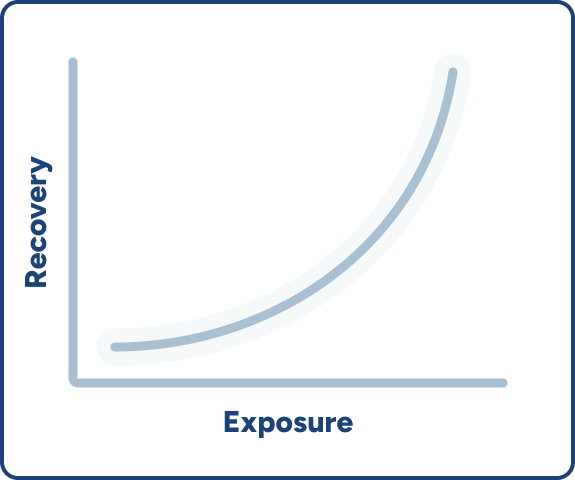
Another therapeutic approach is exposure therapy. A therapist will take you to a safe room and expose you to the things that cause your anxiety. Through guided talk, they will offer you the chance to confront those emotions so that your fears will lessen. During the session, you will be required to practice breathing techniques that help you relax during the session.
The more you expose yourself to unpleasant situations, the better you can handle them. Your confidence in your ability to tackle your symptoms increases as you continue your recovery journey.
Our team believes that the root causes of panic disorder lie in your thoughts. We help you identify, analyze, and reframe old thoughts and patterns so that they don’t hinder your life. We combine our therapies with a 12-step approach to treatment. Members can help other members by sharing stories, listening, and offering advice. We provide a sense of support by providing routine and structure for all clients at our center.
Independence and confidence are the cornerstones of recovery. You can keep your anxiety under control by facing your fears.
There’s one thing you’ll never have to hear at Granite Recovery, and that’s people telling you to snap out of your anxiety. You are surrounded by a team of supportive people who are well-trained to teach you how to cope with your anxiety. We’ll help you face the problem and conquer it.
If you want to visit one of our New England drug rehab centers, please contact us at Granite Recovery Centers. Our experts will work with you to find a high-quality treatment option that meets your needs. We strive to provide a holistic level of treatment with evidence-based care, giving you the help necessary to regain your sobriety for good.

| Cookie | Duration | Description |
|---|---|---|
| __cf_bm | 1 hour | This cookie, set by Cloudflare, is used to support Cloudflare Bot Management. |
| .AspNetCore.Cookies | 11 months | This cookie is installed by BayMark Health Services, Inc. The cookie is used to maintain persistence with ChatGPT sessions. |
| .AspNetCore.CookiesC1 | 11 months | This cookie is installed by BayMark Health Services, Inc. The cookie is used to maintain persistence with ChatGPT sessions. |
| .AspNetCore.CookiesC2 | 11 months | This cookie is installed by BayMark Health Services, Inc. The cookie is used to maintain persistence with ChatGPT sessions. |
| .AspNetCore.CookiesC2 | 11 months | This cookie is installed by BayMark Health Services, Inc. The cookie is used to maintain persistence with ChatGPT sessions. |
| .AspNetCore.CookiesC3 | 11 months | This cookie is installed by BayMark Health Services, Inc. The cookie is used to maintain persistence with ChatGPT sessions. |
| .AspNetCore.CookiesC3 | 11 months | This cookie is installed by BayMark Health Services, Inc. The cookie is used to maintain persistence with ChatGPT sessions. |
| AspNetCore.Cookies | 11 months | This cookie is installed by BayMark Health Services, Inc. The cookie is used to maintain persistence with ChatGPT sessions. |
| AspNetCore.CookiesC1 | 11 months | This cookie is installed by BayMark Health Services, Inc. The cookie is used to maintain persistence with ChatGPT sessions. |
| cookielawinfo-checkbox-advertisement | 1 year | Set by the GDPR Cookie Consent plugin, this cookie records the user consent for the cookies in the "Advertisement" category. |
| cookielawinfo-checkbox-analytics | 11 months | This cookie is set by GDPR Cookie Consent plugin. The cookie is used to store the user consent for the cookies in the category "Analytics". |
| cookielawinfo-checkbox-functional | 11 months | The cookie is set by GDPR cookie consent to record the user consent for the cookies in the category "Functional". |
| cookielawinfo-checkbox-necessary | 11 months | This cookie is set by GDPR Cookie Consent plugin. The cookies is used to store the user consent for the cookies in the category "Necessary". |
| cookielawinfo-checkbox-others | 11 months | This cookie is set by GDPR Cookie Consent plugin. The cookie is used to store the user consent for the cookies in the category "Other. |
| cookielawinfo-checkbox-performance | 11 months | This cookie is set by GDPR Cookie Consent plugin. The cookie is used to store the user consent for the cookies in the category "Performance". |
| CookieLawInfoConsent | 1 year | CookieYes sets this cookie to record the default button state of the corresponding category and the status of CCPA. It works only in coordination with the primary cookie. |
| elementor | never | The website's WordPress theme uses this cookie. It allows the website owner to implement or change the website's content in real-time. |
| viewed_cookie_policy | 11 months | The cookie is set by the GDPR Cookie Consent plugin and is used to store whether or not user has consented to the use of cookies. It does not store any personal data. |
| wpEmojiSettingsSupports | session | WordPress sets this cookie when a user interacts with emojis on a WordPress site. It helps determine if the user's browser can display emojis properly. |
| Cookie | Duration | Description |
|---|---|---|
| yt-player-bandwidth | never | The yt-player-bandwidth cookie is used to store the user's video player preferences and settings, particularly related to bandwidth and streaming quality on YouTube. |
| yt-player-headers-readable | never | The yt-player-headers-readable cookie is used by YouTube to store user preferences related to video playback and interface, enhancing the user's viewing experience. |
| yt-remote-cast-available | session | The yt-remote-cast-available cookie is used to store the user's preferences regarding whether casting is available on their YouTube video player. |
| yt-remote-cast-installed | session | The yt-remote-cast-installed cookie is used to store the user's video player preferences using embedded YouTube video. |
| yt-remote-connected-devices | never | YouTube sets this cookie to store the user's video preferences using embedded YouTube videos. |
| yt-remote-device-id | never | YouTube sets this cookie to store the user's video preferences using embedded YouTube videos. |
| yt-remote-fast-check-period | session | The yt-remote-fast-check-period cookie is used by YouTube to store the user's video player preferences for embedded YouTube videos. |
| yt-remote-session-app | session | The yt-remote-session-app cookie is used by YouTube to store user preferences and information about the interface of the embedded YouTube video player. |
| yt-remote-session-name | session | The yt-remote-session-name cookie is used by YouTube to store the user's video player preferences using embedded YouTube video. |
| ytidb::LAST_RESULT_ENTRY_KEY | never | The cookie ytidb::LAST_RESULT_ENTRY_KEY is used by YouTube to store the last search result entry that was clicked by the user. This information is used to improve the user experience by providing more relevant search results in the future. |
| Cookie | Duration | Description |
|---|---|---|
| _uetsid | 1 day | Bing Ads sets this cookie to engage with a user that has previously visited the website. |
| _uetvid | 1 year 24 days | Bing Ads sets this cookie to engage with a user that has previously visited the website. |
| Cookie | Duration | Description |
|---|---|---|
| _fbp | 3 months | Facebook sets this cookie to display advertisements when either on Facebook or on a digital platform powered by Facebook advertising after visiting the website. |
| _ga | 1 year 1 month 4 days | Google Analytics sets this cookie to calculate visitor, session and campaign data and track site usage for the site's analytics report. The cookie stores information anonymously and assigns a randomly generated number to recognise unique visitors. |
| _ga_* | 1 year 1 month 4 days | Google Analytics sets this cookie to store and count page views. |
| _gat_UA-* | 1 minute | Google Analytics sets this cookie for user behaviour tracking. |
| _gcl_au | 3 months | Google Tag Manager sets the cookie to experiment advertisement efficiency of websites using their services. |
| _gid | 1 day | Google Analytics sets this cookie to store information on how visitors use a website while also creating an analytics report of the website's performance. Some of the collected data includes the number of visitors, their source, and the pages they visit anonymously. |
| _hjSession_* | 1 hour | Hotjar sets this cookie to ensure data from subsequent visits to the same site is attributed to the same user ID, which persists in the Hotjar User ID, which is unique to that site. |
| _hjSessionUser_* | 1 year | Hotjar sets this cookie to ensure data from subsequent visits to the same site is attributed to the same user ID, which persists in the Hotjar User ID, which is unique to that site. |
| _hjTLDTest | session | To determine the most generic cookie path that has to be used instead of the page hostname, Hotjar sets the _hjTLDTest cookie to store different URL substring alternatives until it fails. |
| Cookie | Duration | Description |
|---|---|---|
| __ctmid | 1 month | CallTrackingMetrics sets this cookie to determine the advertising channel that led a visitor to the website and also show the tracking phone number that corresponds to that channel. |
| fr | 3 months | Facebook sets this cookie to show relevant advertisements by tracking user behaviour across the web, on sites with Facebook pixel or Facebook social plugin. |
| MUID | 1 year 24 days | Bing sets this cookie to recognise unique web browsers visiting Microsoft sites. This cookie is used for advertising, site analytics, and other operations. |
| test_cookie | 15 minutes | doubleclick.net sets this cookie to determine if the user's browser supports cookies. |
| VISITOR_INFO1_LIVE | 6 months | YouTube sets this cookie to measure bandwidth, determining whether the user gets the new or old player interface. |
| VISITOR_PRIVACY_METADATA | 6 months | YouTube sets this cookie to store the user's cookie consent state for the current domain. |
| YSC | session | Youtube sets this cookie to track the views of embedded videos on Youtube pages. |
| yt.innertube::nextId | never | YouTube sets this cookie to register a unique ID to store data on what videos from YouTube the user has seen. |
| yt.innertube::requests | never | YouTube sets this cookie to register a unique ID to store data on what videos from YouTube the user has seen. |
| Cookie | Duration | Description |
|---|---|---|
| ct213024 | session | Description is currently not available. |
| ENTERPRISE_SESSION | 7 days | Description is currently not available. |
| guest | 1 month | No description available. |
| JOTFORM_SESSION | 1 month | No description available. |
| MSPTC | 1 year 24 days | Description is currently not available. |
| userReferer | 1 month | No description available. |